Cristiana Dumitru

Posts by Cristiana Dumitru

"In order to learn to draw you must learn to see" is the quote that inspired me to seek beauty in life, not only in art. I also may say that life is the best theme in art. I let drawing be only a hobby for me so I would never lose my passion by turning it into an every-day job. That is why I decided to write about art. Cristiana Dumitru lives in Bucharest, Romania, besides art she is also a news presenter on Radio ZU, the national Romanian radio.

How Paul Cezanne Learned to Paint Nature

Cezanne began to trust his talent after being appreciated by his pear Pissarro.

Written by Cristiana Dumitru on February 3, 2012

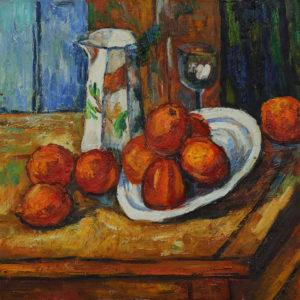
cezanne 300x250 How Paul Cezanne Learned to Paint NatureWhat’s the sound of one hand clapping? When there is no one around you, how do you know if you have talent? Paul Cezanne never thought he was a true artist. He often destroyed his paintings after finishing them, because he didn’t like the result. Cezanne wanted to take part in the French Salon exhibitions, but never got accepted. Paul was so dissatisfied with the results of his work, that he even showed some sympathy with the jury of the Salon:

I understand very well that it could not be accepted, because of my point of departure, which was too far away from the objective to be achieved, namely the reproduction of nature.”

However, as mistrustful as he was in his own talent, he did have the courage to stand with his point of view in concerning how to paint nature. This reproduction of nature took place in two stages in Cezanne’s work. Before he had actually begun painting, he would sit down and just admire the view. He would spend a lot of time just looking at the subject, in order to understand its essence. Then he would realize the structure of the painting based on the forms and colors, which he saw. He always said that a painter should not only reproduce reality, but what he sees. However, the forms must retain a similarity with nature. “The re-forming process which a painter carries out as a result of his own personal way of seeing things gives a new interest to the depiction of nature. As a painter, he is revealing something which no-one has ever seen before and translating it into absolute concepts of painting. That is, into something other than reality.” Since Cezanne, “the absolute concepts of painting” are colors and forms. These are bent together in a spatial relationship. In this way, he sought to create a new harmony, which he called “harmony in parallel with nature”.

cezanne2 300x250 How Paul Cezanne Learned to Paint NatureEven if he had a clear idea of how to paint, Cezanne still didn’t like the result. He would work on the same painting for long periods of time, sometimes even months. “Nature causes me the greatest of difficulties”, wrote Paul to his friend Emile Zola in 1897. His goal was to give the image permanence. This meant that the subject had to be placed in a balance, which was the result of numerous calculations, reflections and logic. However, the result was sometimes disastrous for Cezanne. It was like he had a picture in his mind but could never put it down on canvas.

As if he didn’t have enough mistrust in his talent, the press started to attack his paintings. An art critic wrote: “There is no outrageous epithet that has not been attached to his name. For my part, I do not know of any painting less laughable than his.” With these words, there is no wonder that Cezanne destroyed his paintings very often and didn’t trust his vision as an artist. However, he had the luck of having good friends who believed in his talent, such as Emile Zola and Camille Pissarro. The last one, older than him by nine years, had become his teacher. Most of the techniques he used later in his life when painting nature, he “borrowed” from Pissarro. “Pissarro was like a father to me… almost like the good God”, said Cezanne. As I heard once, “when the student is ready, the teacher will appear”. This was the break for Cezanne to begin to paint like a maestro.

The first thing Pissarro did was to encourage him to banish dark colors from his palette. He advised Cezanne to paint only with the primary colors. Then he showed him how to build up a picture of light-dark contrasts and encouraged him to observe nature, transferring onto canvas only what he saw. He shouldn’t interpret or add anything from his own imagination. Another advice Cezanne got from Pissarro was to build objects up by gradation of tonal value, rather than using lines to outline the forms. “Do not work bit by bit,” he said to Cezanne. This meant to apply color everywhere and observing the tonal values closely in relation to the surroundings. From this point on, Paul began to paint with small brush strokes, rather than big ones. He worked at the same time on the sky, the trees, the houses, rather than painting bit by bit. “Do not be afraid of applying strong color; gradually refine your work. Do not follow rules and principles, but paint what you see and feel,” advised Pissarro.

The two friends often chose the same subjects, painting side by side. This was a friendship that lasted a lifetime. Such friendship that one needs in critical moments in their lives, when they are shattered in mind. A friendship that gave Cezanne the courage he needed to stand up for what he believed a painting should look like, without the constraints of the Salon.

Picasso Lovin’ Thieves Strike Once More

A Picasso, Mondrian and a Caccia were stolen from The National Greek Gallery.

Written by Cristiana Dumitru on January 30, 2012

picasso stolen 224x300 Picasso Lovin’ Thieves Strike Once MoreA planned art theft made by the book. One or more thieves on the second week of the year stole three paintings from the National Greek Gallery in Athens. The entire heist took about seven minutes, according to police.

One of the artworks was made by the Spanish artist Pablo Picasso, “Woman’s Head,” a 1930s cubist bust painting. The art had been donated by the artist himself to the Greek people in 1949, as an honorary offer for its brave resistance during the Nazi occupation, in the context of the donation of French artists’ works.

Besides Picasso’s painting, the thieves also stole Piet Mondrian’s “Mill,” a 1905 oil canvas of a riverside scene and windmill. The Dutch painter made the artwork in 1905, and had been hanging on The National Greek Gallery wall since 1963, by the donation of Alexander Pappas.

The third art work now in the hands of the thieves is a pen-and-ink sketch of St. Diego de Alcala in ecstasy with Holy Trinity and the symbols of passion, made in the 16th century by the Italian artist Guglielmo Caccia. The work had been donated to the National Gallery by Gregory Maraslis in 1907.

The thieves got into the Museum by an ingenious plan: At the beginning of that evening, the robbers intentionally set off the gallery’s alarm system several times without entering the building. Police stated that the security staffers on duty investigated and found no disturbances. In consequence, they disabled one of the alarms. The burglars then entered through a balcony door uninterrupted!

However, their plan was compromised by one of the motion sensors in the exhibition area. It was 4:30 in the morning, local time. At that moment, one of the guards just arrived in time to see one of the suspects fleeing. If he hadn’t been there, the thieves could have also gone with another 1905 Mondrian work. The painting depicting a typical farm had been abandoned by the robbers at the guardian’s arrival!

The National Greek Gallery hadn’t made an estimation of the art works valued yet. Furthermore, the thieves had not been apprehended as of now. Several investigations are being carried out to identify and arrest the offenders. Another investigation is being conducted by the Attica Security Division. In addition, international searches which have been issued in order to trace the paintings.

This theft is only one in a long line of Picasso related burglaries done in the last decade, and the Picasso stolen now, “Woman’s Head,” joins a long list of Picasso’s that still remain at large. For example “The Dance,” disappeared on February 24th, 2006, from the Museu da Chacara do Ceu in Rio de Janeiro, Brazil, and “The Pigeon with Green Peas,” stolen from the Musée d’Art Moderne de la Ville de Paris last year, on May 20th 2011.

Moreover, in 2011, art thieves destroyed a Picasso that was estimated at $100 million. The works (by Picasso, Matisse and Modigliani) that were stolen last year from a museum in Paris were thrown in the garbage and probably crushed by a rubbish truck.

Here is a list of the top 10 artists with most works stolen, Picasso leads the bunch by a considerable margin:

  1. Pablo Picasso – 1,147
  2. Nick Lawrence – 557
  3. Marc Chagall – 516
  4. Karel Appel – 505
  5. Salvador Dali – 505
  6. Joan Miro – 478
  7. David Levine – 343
  8. Andy Warhol – 343
  9. Rembrandt – 337
  10. Peter Reinicke – 336

Rothko’s Secrets Revealed – The Theory Behind the Illuminating Bands

The associations of colors and the distance a viewer must stay in front of his paintings expose the viewer to feelings of anger and happiness.

Written by Cristiana Dumitru on January 16, 2012

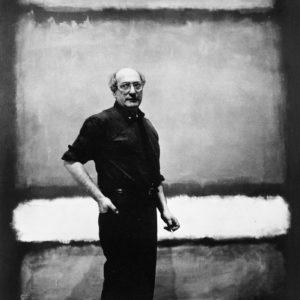
MarkRothko 262x300 Rothko’s Secrets Revealed – The Theory Behind the Illuminating BandsMark Rothko managed to make viewers burst with feelings just by looking at his simplistic illuminating bands. He didn’t care about the color theories, or what the critiques say about his images. He sought to bring out of the viewer’s soul emotions of fear, love or hate. It is said that there were people who actually cried just by looking at his color associations. Some may say that the artist’s powerful passions for his creation may have charged the works of art with the painter’s emotions.

So how did Rothko manage to bring such feelings to the people who viewed his paintings? In the countless letters, he wrote in his life, Mark Rothko reveals his secrets.

Rothko used the entire spectrum of color. However, he tented to a particular hue depending on the phase through which he passed in his life. For example, in the mid-1950s, he preferred bright reds and yellows instead of dark blues or greens, which he used towards the end of his life, when he was rather depressed. Rothko usually mixed his paints himself. On the untreated, unprimed canvas, he brushed a thin layer of binder into which color pigments had been added. He then fixed this foundation with oils, which he allowed to spread around the unframed edges of the painting. Over these, Rothko applied overlapping color mixtures. These mixtures were strongly tinned. This is why their pigmentation barely adhered to the surface of the picture. The procedure gave his paintings transparency and luminance. The technique continues with the applying of the color layers. Rothko used to lay on the pigments with very light and fast brush strokes, by imagining that the colors were inserted into the painting. Thus, he created a symmetrical underlining that offered him the possibility of juggling with colors. More to say, Rothko gave a dramatic air to his paintings by creating a tension of contrast. Therefore, the colors sustained each other just by their association, their effect on the viewer as by the tension of fixation, which Rothko described as tragic.

rothko 225x300 Rothko’s Secrets Revealed – The Theory Behind the Illuminating BandsFrom 1949 to 1956, the artist painted almost exclusively in oils, using mostly vertical formats. The sizes of the canvases exceeded 10 Feet in height. Rothko explained his choice in large-format paintings by making the viewer to stand to a certain distance in order to feel inserted in the atmosphere. “I realize that historically the function of painting large pictures is painting something very grandiose and pompous. The reason I paint them, however – I think it applies to other painters I know – is precisely because I want to be very intimate and human. To paint a small picture is to place a stereopticon view or with a reduction glass. However, you paint the larger picture, you are in it. It isn’t something you command.” Rothko made his paintings in order to be viewed from a certain distance, 45 centimeters. In this way, the viewer would feel inserted in the fields of color, which gave him certain feelings, of anger or happiness. This is why some cry at the pure glimpse of a Rothko painting.

Van Gogh’s Obsession with Yellow Sunflowers

The famous sunflower paintings were meant to pull Vincent van Gogh out of the darkness of his depression

Written by Cristiana Dumitru on January 9, 2012

The sunflower paintings of Vincent van Gogh could be called “Variations on the yellow theme”. Struck by many dark obsessions caused by depression, yellow was meant to illuminate van Gogh’s days. The psychologists could say that the painter clinched to this color in order to find the light that will draw him back from the darkness in his desperate moments.

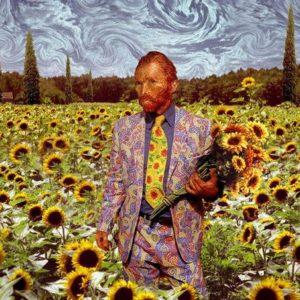
sunflowers 250x300 Van Gogh’s Obsession with Yellow SunflowersThe sunflower has a psychological affect that gives an impression of perpetual happiness. Therefore, these paintings seem timeless. Yellow and blue are the colors which, it seems bring the artists childhood and Dutch memories. It is a classic contrast of colors. This contrast gives profound emotions to the art: “The dome of the sky has an extraordinary blue; the color of the sunlight is that of pale sulfur, sweet and enchanting, as the combination between the heavenly blue and the yellow in Vermeer or Delft’s paintings. I fail to resume so beautiful,” writes Vincent to his brother Theo. In another letter, he claims to have found in Provence “a different kind of yellow.” Van Gogh was influenced by the Impressionists with his warm tones and “plain air” paintings.

The sunflowers series has beginnings in the Paris Period, in 1887. The specifics of these paintings is given by the arrangement of the flowers. They are lying on the ground, while the second set executed a year later in Arles shows bouquets of sunflowers in a vase. The predominant color in the arlesian palette acquires a distinctive brightness and freeing itself from the subject. In the artist’s mind, both sets were linked by the name of his friend Paul Gauguin, who acquired two of the Paris versions. Paul Gauguin, who was Vincent’s guest for two months in 1888, talks about the love Van Gogh had for yellow, in the “Essay about free art,” published in 1894: “The yellow-chrome Sun burst forth from the canvas, flooding houses and flowers. Oh yes, the good Vincent, that Dutch painter, a fondness for yellow; the sun baths bathed his soul. He was a man who feared darkness. He needed heat.” Gauguin also liked Vincent’s sunflower subjects, van Gogh recalls, and remembers that, in a picture, now stored in the Van Gogh Museum in Amsterdam, he makes the portrait of his friend trying to paint the yellow corollas.

vangogh sunflowers Van Gogh’s Obsession with Yellow Sunflowers

On the other hand, symbolism was quite a fashion in the young generation of artists in those days. Therefore, Vincent tried to portray the essence of the chosen object and in so, avoiding mere photographic imitation. Van Gogh’s Sunflowers paintings capture the pastoral application of color and the confused arrangement of outstretched leaves. The light-blue background in some pictures comes to emphasize the flowers. Two clearly-marked styles are seen in these paintings: a continuous composition of wavy curves and complicated short and sharp dashes. The Sunflowers series made in Arles are painted on size 30 canvas. The artist made the paintings between August 1888 and January 1889. The paintings show sunflowers in all stages of life, from full bloom to withering. Some of the versions are no longer in their original state, for example, the Tokyo version. The paining was enlarged on all sides with strips of canvas, which were added at a later time. It is said the changes were made by the first owner, Emile Schuffenecker.

“Van Gogh’s Still Life: Vase with Fifteen Sunflowers” held the record for the most expensive painting in art history in 1987. On March 31, the Japanese magnate Yasuo Goto paid for the painting $39,921,750 at Christie’s London auction. The record was broken a few months later by Alan Bond, who bought Van Gogh’s “Irises”, for $53.9 million.

Amadeo Modigliaini’s Love Affairs

Amedeo Modigliani immortalized beautiful women on canvas while seducing them. No wonder they say painters in the 1920's were like rock stars in the 1980's.

Written by Cristiana Dumitru on January 3, 2012

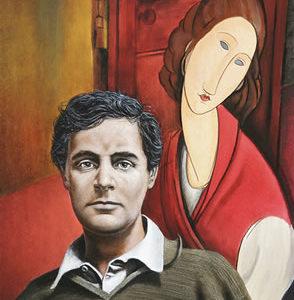
amedeo modigliani Amadeo Modigliaini’s  Love AffairsAmedo Modigliani’s sex-appeal attracted women from the first moment he began to paint. The whole artistic process was impregnated with seduction. Beautiful and sensual, gentle and gallant, these are the characterizations of the women who fell in love with the lover, Modigliani.

When Modigliani arrived at Paris for the first time, he was a shy, young student. After only two years of living in the artistic capital of France, the boy turned into a man, sort of a suburb Prince. The “distinction” brought him numerous “love conquests.” He attracted women with a remarkable ease. Many of these ladies became famous, by immortalizing them on canvas. He sought for the features that defined those women, and through a single brush stroke he made their portraits, that through their simplicity, they became unique. Modi treated his lovers with a sense of dignity, even at extreme poverty and deteriorating health.

Modigliani’s life is punctuated by many stories, about his adventures escapades with women. Gilberte, Maud, Elvire, Margherita, Marie, Lucienne and Gaby are names who appear frequently in the Biographical texts about the artist. Furthermore, even Modi keeps them alive by immortalizing them on canvas, by dedicating them portraits and nudes.

Modi was adored by all the women legend has it, even by the house mistresses, who protected him. Among these is the famous Rosalie, the patron of Montparnasse Chez Rosalie. She tells the story:

“Poor Amedeo! Here, he was at home. When he was asleep under a tree or in a rut, they would bring him to me. Then they put him on a mattress in the back of the house, and he sit there until he woke up of drunkenness. And, God, how beautiful he was! All the women chased around after him!”

However, only the names of a few remained linked to the legend of the painter. Among these was Elvira, who was called Quique, the daughter of a prostitute from Marseille and an unknown father. She met Modi in a cafe in Montmartre. Amedeo immediately fell in love with her, saying that she was “made for love.” Between them grew a strong sexual and free love, such as in most of Modi’s relationships. Legend has it that one day the two were caught dancing naked in the garden of Amedeo’s workshop.

Modi’s heart was for a time dedicated to the eccentric English artist Nina Hamnett, who the painter met in 1914. The two had a romantic relationship kept away from his friend’s eyes, just like the story with Zabrowsky’s friend, Lunia Czechowska.

Another love story, however, tragic, is with the French singer, Simone Thiroux. She excessively protected Modi, had a total love, full of adoration. This suffocated Amedeo so much that became annoying for him. Simone gave Amedeo a son, but Modi did not want to recognize him. In desperation, Thiroux begged for his love in a farewell letter. Simone dies of tuberculosis, and the unrecognized child, Serge Gerard, will be given up for adoption.

So far, none of the women remained in Modi’s heart. The only lovers who have become his muses and to whom he dedicated countless portraits were English woman Beatrice Hastings, a writer with whom he spent two years, and the shy Jeanne Hebuterne. The rendezvous with Beatrice is confrontational, between two strong personalities, odd and difficult. The portraits in which we recognize her as a model are not sensual, tender or full of love, but rather harsh, with a slight comic tint. In one of the paintings with Beatrice, Modi makes refers to the character of Madame Pompadour, the famous mistress of Louis XV.

In the years, he spent with Beatrice, Amedeo had developed his techniques in painting portraits. Through several simplifications and accents, he could compose a simple, personal and unique work of art. The bodies and the faces become elongated features, elegant. The eyes are represented only by some black holes, affording them a timeless status. His portraits are presented in a frontal manner with an anonymous setting and remind us of the Byzantine icons.

If the relationship with Beatrice was tumultuous, inflammatory, his last and greatest love, Jeanne Hebuterne had provided him stability and tenderness. To her he dedicated most of his portraits, but never nudes.

Things you may not know about Degas

Degas's attempt to make historical paintings: Degas tried painting historical scenes but gave it up after a disappointing exhibition.

Written by Cristiana Dumitru on December 30, 2011

degas old 300x186 Things you may not know about DegasIt was with a historical painting that Edgar Degas made his Salon debut in 1865, with “The Suffering of the City of New Orleans.” The art work symbolized the suffering of the American city, which was occupied by Union troops in 1862 during the Civil War. However, the painting had not garnered any attention. This happened because, in the same exhibit, Manet’s “Olimpia” had monopolized the critics’s conversation. “The suffering of the City of New Orleans” turned out to be also his last historical work of art.

Degas’s point of view, his approach in making historical events was very theatrical. The history of the events was more as a spectacle than presenting what had really happened. However, in the mid-19th century interest in historical artworks began to diminish noticeably, because private collectors who commissioned paintings had changed their preferences.

degas3 250x300 Things you may not know about DegasBefore giving up this art genre, Degas painted a big number of historical events between 1855 to 1865, some of them in large-format. His approach came from the painters who caught his attention, such as Dominique Ingres, Eugene Delacroix and Puvis de Chavannes. Many of his projects never left the planning stage. The most important work of this period in Degas’s life wasn’t “The Suffering of the City of New Orleans,” but rather the “Spartan Girls Challenging Boys,” painted in 1860. The artist made sixteen drawings and two oil sketches representing this historical event, before settling to one approach. Furthermore, the historical paintings betray the doubts of the artist in concerning the conflict between genre requirements and his interests. This is why Degas exhibited the painting as late as the fifth Impressionist show in 1887, and kept it in his studio throughout his life.

After passing through his historical period, Degas started to make portraits and eventually found his own unique style, which he is so famous for today, of painting dance and movement in the Impressionist style.

brought to you by overstockArt.com

Get Updates by Email

Browse Recent Stories

  • Painting by Rothko fetches record at $86m
  • Renoir - Discarded Roses
  • Monet - Poppy Field in Argenteuil Oil Painting
  • Munch - The Scream Sold at Auction
  • Munch - The Scream
  • overstockArt.com Oil Paintings App for iPad
  • Degas - Dance Class
  • Dali dreams
  • Monet - Water Lilies (pink)
  • Thomas
Claude Monet Oil PaintingsVincent Van Gogh PaintingsGustav Klimt Oil PaintingsPablo Picasso Oil Paintings