It’s Not Van Gogh, It’s His Brother

Experts at the Van Gogh Museum discover a self-portrait isn't what it seems

Written by Tiffany Chaney on July 8, 2011

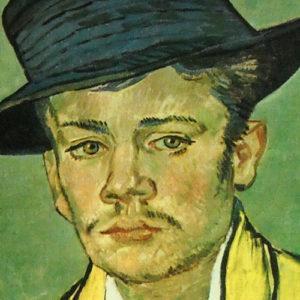
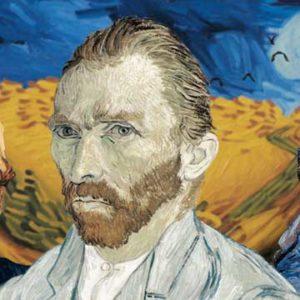
Last week, the Van Gogh Museum told press officials that a known self-portrait by Van Gogh isn’t really the artist, it’s his brother, Theo. Vincent Van Gogh’s brother was a major patron of his artwork, supporting Vincent throughout most of his life, morally and financially.

vangogh Its Not Van Gogh, Its His BrotherArt historians at the museum say that if this is true then the “self-portrait” will be the only known portrait created by Van Gogh of his brother, aside from casual sketches. Museum spokeswoman Linda Snoek said that the piece was rendered in 1887, when the brothers resided together in Paris. It seems this era of Vincent Van Gogh’s life isn’t well known, except through a few letters exchanged between the brothers.

The brothers are close in resemblance, but scholars say that it is in fact Theo for a number of reasons. A CBS news source shares the following comparisons, “The portrait of Theo shows he had rounder ears than Vincent did. The other portrait shows Vincent with long, angular ears, consistent with other artists’ paintings of Vincent. That is before he famously self-mutilated one of his ears in December 1888.

In addition, Theo’s goatee is more yellow-brown than Vincent’s dark red beard, and Theo has shaven cheeks, consistent with photographs of him from the same period, while Vincent painted himself sporting mutton-chop sideburns.”

Another Van Gogh Self-Portrait (1887), with “mutton-chops”

vangogh2 Its Not Van Gogh, Its His BrotherVan Gogh rendered this self portrait in 1887. He made the move to Paris to live with Theo in 1886, aged 32 years. This was at the height of the Impressionist movement, where he was inspired by and moved alongside Monet and Gauguin. He and Gauguin worked together in Arles, where Van Gogh painted sunflowers to help decorate Gauguin’s residence. Interestingly, the sunflowers are later found in several of Van Gogh’s artworks. The exposure to Impressionism inspired the use of dramatic color in his modern art pieces.

In 1888, mental illness began to become more evident. It was the year that he suffered from bouts of epilepsy, psychotic attacks, and delusions. In one episode he took a knife to his ear and severed it, and later offered the removed ear to a prostitute. This was the same knife he assaulted Gauguin with earlier in the day. Before the episodes became severe, Van Gogh dreamed of creating his own school with Gauguin and other artists.

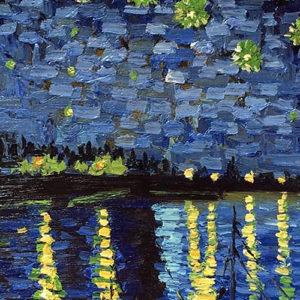
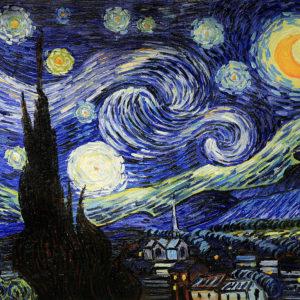
Vincent left Saint-Rémy-de-Provence in 1890 and regained contact with Theo. Though he viewed his life and work as a failure, he continued to paint a new work almost daily. Paint flowed through his veins. It was during this time that he created Starry Night, a beloved favorite for most in the world. Whatever fueled his artwork could not be rendered fast enough, like many artists who speak of death at the hands of their muse.

On July 27, 1890 Van Gogh shot himself in the chest and survived the suicide attempt, but he died from the wound two days later. Theo was devastated and inherited the majority of Vincent’s work. Six months later Theo, too, died. His widow took Vincent’s work to Holland to advocate for the work of a brilliant artist and his most supportive patron, his brother Theo.

The mad artist who never stopped painting

Mad Art: Vincent Van Gogh - His Madness Flamed his Artistic Creativity.

Written by Cristiana Dumitru on June 26, 2011

van gohg 300x164 The mad artist who never stopped paintingArt is passion. Art is passion for those who make it and for those who look at it.

When you create you are absorbed, you don’t realize the time passing, you don’t need a human near, you are preoccupide by just creating, you even forget about yourself.

When you view art, you are absorbed into someone else’s creation, you search for a meaning, for your own vision, for an answer, as small as it may be. Art is freedom, the freedom to create, to dream for the impossible and to put it on a paper, to look at it and to search for your own imagination.

Such freedom maybe what Vincent Van Gogh searched for. Is it so that madness is a prison or maybe the freedom of the mind? What is interesting is that the mad painter, Van Gogh, never forgot to follow his passion, painting, even when he had his first breakdown, on the 23rd of December 1888. On that night Van Gogh cut his ear and sent it to a lady companion, named Rachel. Signs of his personality disorder are found in his boderline behavior. On the one hand he had a strong religious fanaticism and on the other hand he had failed love experiences. He was also deeply disappointed in life and felt non-integrated in his own environment.

About all these sufferings he wrote to his brother before the “ear” incident. He said that his deep disappointment is caused by the “despair in which I live due to failure of each action I undertook so far and for which I deserve a thousand reprimands”.

Despite his bouts of madness, Van Gogh never stopped painting. His famous Starry night was completed a year after, in June 1889. That for me is proof that no matter how lost a painter is he will never lose his passion for art, he might loose his mind, but he will never lose his talent.

In the period he painted this masterpiece he was confined to the Saint Remy Asylum. The painting represents an impressive demonstration of the uniqueness of how he perceives and interprets nature. In that period at Saint Remy he lost his faith so in order to find his inner peace he used to paint at night.

Van Gogh might be the artist who best represents the myth of misunderstood genius, a genius that could never paint in such a way if he had been a normal person and not a mad man.

Top 10 Oil Paintings of Motherhood

Written by Amitai Sasson on April 20, 2010

MATERNITY 250x300 Top 10 Oil Paintings of MotherhoodoverstockArt.com, the leader in handmade oil painting art reproductions, released today its Mother’s Day Top 10 list. This year’s list names the top 10 oil paintings featuring images of motherhood.

Topping the chart is Claude Monet’s masterpiece Poppy Field in Argenteuil. Oil paintings by master artists Mary Cassatt, Gustav Klimt, Vincent van Gogh, Pablo Picasso, and Pierre-Auguste Renoir also made the list.

“Many master artists depicted images of motherhood in their oil paintings,” said Stacy Sasson, co-founder of overstockArt.com. “No other art form better exemplifies the tender, timeless bond between a mother and a child.”

The oil paintings that made the 2010 Mother’s Day Top 10 list are:

  1. Poppy Field in Argenteuil, Claude Monet – In this colorful oil painting, originally created in 1873, Claude Monet painted his wife and son strolling together among the poppies.
  2. Le tre eta della donna (Mother and Child), Gustav Klimt – Mother and Child is part of Klimt’s famous oil painting Three Ages of Woman. The painting depicts an image of a mother cradling her young son. The original was created in 1905, three years after the death of Klimt’s baby son, Otto.
  3. Breakfast in Bed 1897, Mary Cassatt – The subject of mothers and children recurred in many of Cassatt’s works. In this piece, a child’s attention wanders as she is held in her mother’s loving embrace.
  4. First Steps, Vincent van Gogh – From late 1889 to 1890, while van Gogh was a voluntary patient at the asylum in Saint-Rémy, he painted twenty-one copies of Jean-François Millet’s works. In January 1890, van Gogh transferred a photograph of Millet’s First Steps to canvas.
  5. Maternity, Pablo Picasso – This stunning oil painting, originally created in 1905, depicts the intimate bond of mother and child.
  6. Madame Monet and her Son, Claude Monet – This masterpiece, originally painted in 1875, depicts Monet’s first wife Claude and their eldest son, Jean.
  7. Summertime, Mary Cassatt – Although never a mother herself, Cassatt principally painted children and scenes of motherhood. Summertime illustrates a mother and daughter enjoying a leisurely summer day boating. The original masterpiece was created in 1894.
  8. Woman with a Parasol and Small Child on a Sunlit Hillside, Pierre-Auguste Renoir – Originally painted in 1874, this masterpiece depicts a mother relaxing in the grass while her young child wanders off in behind her in the tall grass.
  9. Hope II, Gustav Klimt – Although images of women and children are frequent in the history of art, depictions of pregnancy are rare. In Hope II a woman lowers her head toward her swelling belly. The original masterpiece was created in 1907-08.
  10. Pieta, Vincent van Gogh – Originally created in 1889 while van Gogh was staying at the asylum in Saint-Rémy, Pieta is the agonizing depiction of Mary in sorrow over her dead son.

The Mother’s Day Top 10 List was composed by pulling overstockArt.com sales data from April 2009 to March 2010. “Mother’s Day is our third busiest selling period of the year,” said Sasson. “People love giving their moms the gift of art for Mother’s Day – it is a wonderful expression of love that will last a lifetime.”

Improve Creativity in Your Organization

Written by dsasson on December 31, 2009

Imagination is more important than knowledge.
– Albert Einstein

The value of creativity has been discussed by many business visionaries. Michael Dell said, “It’s through curiosity and looking at opportunities in new ways that we’ve always mapped our path at Dell.” Bill Gates said “I’ve always been an optimist and I suppose that is rooted in my belief that the power of creativity and intelligence can make the world a better place.”

Leaders often place a value on “thinking out of the box.” But if creativity is so important why do large and small companies often leave it to chance?

The development of creativity in your organization should be approached with conscious intent. You need to create an atmosphere that fosters creativity. Many organizations have gray cubicles, bare walls, bland conference rooms, and semi-isolated employees working in small areas covered by creativity-reducing colors, visions and sounds. How can we expect people in this environment to think creatively for our organizations?

So what can companies do to improve this most critical element called creativity? It is amazing how much can be done with a relatively small investment.

  • Replace standard corporate posters in conference rooms, hallways and offices with beautiful oil paintings. Hand-painted reproductions of great masters such as Picasso, Van Gogh, Monet and Klimt.
  • Invest in a simple sound system that plays classical music. If this is inappropriate in some work zones, designate break rooms and conference rooms for music. A study by the University of California, Irvine demonstrated that IQ scores rise significantly (although temporarily) when subjects are tested while listening to Mozart.
  • Designate a room a company “thinking room.” Place small toys, crayons, markers and paper in the room. Let employees express themselves in this room a few times a day. You can even have a mandatory “10 minutes thinking time.”

The ability to think creatively should not be the sole responsibility of the leader or CEO of the business. This function could be shared by all and by doing so increase the productivity of any company. The three steps listed above are simple to take and require a relatively small investment. It’s vitally important to enjoy this process and let your own creativity dictate the application of these steps.

 Improve Creativity in Your Organization
brought to you by overstockArt.com

Get Updates by Email

Browse Recent Stories

  • Joseph William Turner - Tintern Abbey
  • Da Vinci - Lady With an Ermine
  • Cezanne - Bricoo, Bicchiere e Piato
  • join the artistic conversation on facebook!
  • Dali - Swans Reflecting Elephants
  • Picasso stolen from Greek gallery
  • Vincent Van Gogh - Sunflowers (Artist Interpretation Red)
  • The most Romantic Art - Gustav Klimt the Kiss Oil Painting
  • Van Gogh - Vase with Fifteen Sunflowers
  • Van Gogh - Vase with Fifteen Sunflowers
Claude Monet Oil PaintingsVincent Van Gogh PaintingsGustav Klimt Oil PaintingsPablo Picasso Oil Paintings